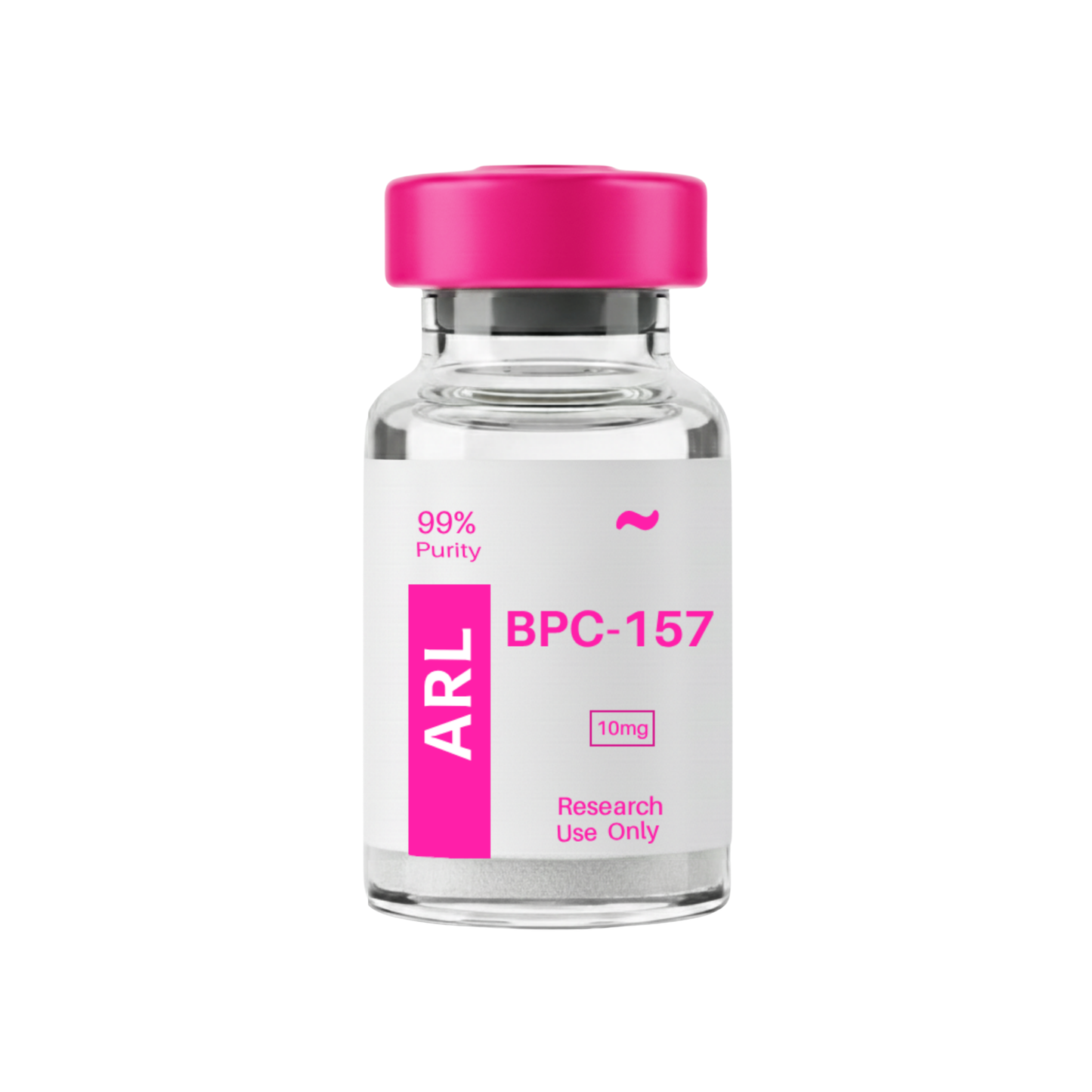
BPC-157
BPC-157
This batch of BPC-157 Body Protection Compound Peptide has been third party lab tested and verified for quality.
Contents: BPC-157
Form: Powder
Purity: 99.3%
Couldn't load pickup availability
Free Reconstitution Solution automatically added to your cart with each order.
This product is Made, Tested & Shipped From United State.
Shipping & Delivery
We are committed to delivering fast, reliable, and transparent shipping for all orders. Please review our policy below for details on delivery times, tracking, and what to expect with every purchase.
View Full Shipping Policy
Verified+

BPC-157 Research Design: Methodology Considerations and Investigation Approaches
Study Design Considerations for BPC-157 Research
Investigators evaluating BPC-157 must consider multiple experimental design parameters affecting research quality and outcome interpretation.
Model Selection:
Research contexts range from in vitro cell culture investigations to in vivo animal models. Cell culture permits mechanistic investigation at the cellular level. Animal models permit whole-organism evaluation of BPC-157 effects in physiologically relevant contexts. Model selection depends on research objectives—mechanistic investigations might prioritize cell culture, while efficacy investigations typically employ animal models.
BPC-157 Structure
Dose-Response Analysis:
Published research consistently emphasizes dose-dependent BPC-157 effects. Rigorous study design requires systematic evaluation across multiple doses to establish dose-response relationships, identify optimal effective doses, and assess potential dose ceiling effects or toxicity.
Administration Route Considerations:
BPC-157 permits multiple administration routes including parenteral (intravenous, intramuscular, subcutaneous) and oral administration. Route selection affects bioavailability, tissue distribution, and onset/duration of effects. Subcutaneous administration provides excellent bioavailability; oral administration provides moderate bioavailability with potential for convenient dosing.
Outcome Measurement:
Comprehensive BPC-157 research requires measurement of multiple outcome parameters:
Tissue repair outcomes (healing timeline, collagen deposition, tissue quality); vascular outcomes (vessel density, perfusion restoration, collateral formation); cellular outcomes (fibroblast proliferation, migration, FAK/Paxillin expression); and biochemical outcomes (oxidative markers, antioxidant enzyme activity).
Mechanistic Investigation Approaches
Molecular Pathway Analysis:
Investigating BPC-157's mechanisms requires assessing effects on specific signaling pathways. VEGFR2 activation can be measured through phosphorylation status assessment. Fibroblast activation can be evaluated through proliferation assays and migration assays. Actin dynamics can be assessed through FITC-phalloidin staining and immunohistochemistry.
Gene Expression Analysis:
Real-time PCR analysis can quantify expression of genes encoding repair-related proteins (collagen, growth factors), antioxidant enzymes (SOD, catalase), and pro-inflammatory mediators. These measurements reveal molecular-level mechanisms underlying observed healing effects.
Cellular Behavior Assessment:
Cell culture approaches permit direct assessment of fibroblast and endothelial cell behavior. Migration assays (transwell migration, scratch assays) quantify cell motility. Proliferation assays (MTT assay, BrdU incorporation) measure cell division. Differentiation assays assess cellular specialization.
Animal Model Considerations
Model Selection for Specific Research Questions:
Rodent models provide cost-effective, well-characterized platforms for initial BPC-157 investigations. Larger animal models (canine, ovine) permit evaluation in animals with tissue properties more similar to humans and permit assessment of chronic effects. Model selection depends on research objectives and available resources.
Wound Healing Models:
Multiple established wound healing models permit standardized BPC-157 evaluation—full-thickness excision wounds, incision wounds, burn wounds, diabetic wound models. Each model system addresses particular healing challenges relevant to different clinical contexts.
Ischemic Injury Models:
Vascular occlusion models permit investigation of BPC-157's angiogenic properties in ischemic contexts. Common approaches include femoral artery occlusion, hindlimb ischemia models, and cerebral ischemia models.
Tendon Injury Models:
Standardized tendon injury models permit investigation of BPC-157 in connective tissue healing. These models typically involve controlled tendon transection followed by evaluation of healing progression.
Statistical Considerations
Sample Size Determination:
Adequate sample sizes are essential for detecting treatment effects. Power analyses should inform sample size selection to ensure sufficient statistical power while avoiding unnecessarily large studies.
Statistical Testing:
Appropriate statistical tests depend on data characteristics. Parametric tests (t-tests, ANOVA) apply to normally distributed continuous data. Non-parametric alternatives apply when normality assumptions are violated.
Multiple Comparisons:
When multiple treatment groups are compared, appropriate multiple comparison corrections (Bonferroni, Tukey) prevent inflated Type I error rates.
Quality Control and Reproducibility
Peptide Characterization:
BPC-157 should be characterized for purity, identity, and stability. Mass spectrometry confirms molecular identity. High-performance liquid chromatography (HPLC) assesses purity. Stability testing over time in storage conditions validates long-term usability.
Investigator Blinding:
Outcome assessors should remain blinded to treatment assignments when feasible, reducing observer bias in subjective assessments.
Randomization:
Random treatment assignment prevents selection bias and confounding.
Translational Research Considerations
Successful preclinical BPC-157 research supports translational advancement toward potential clinical applications. Rigorous preclinical investigation establishing safety, efficacy, and mechanism provides foundation for clinical investigation.
Referenced Citations
- T. Chang et al. "Body pentadecapeptide compound 157 enhances alkali burn-induced corneal wound repair through promotion of epithelial cell migration." Curr. Eye Res., vol. 32, no. 5, pp. 451-458, May 2007.
- G. Brcic et al. "Gastroprotective pentadecapeptide compound therapy aids in different ulcerative colitis scenarios." World J. Gastroenterol., vol. 14, no. 37, pp. 5757-5777, Oct. 2008.
- P. Seijer et al. "Improving a novel protein compound and clinical symptoms in inflammatory bowel syndrome: BPC 157, a fresh hope and alternative therapy." Inflamm. Bowel Dis., vol. 9, no. 1, pp. 91-93, Jan. 2003.
- M. Sikirić et al. "Peptide protein pentadecapeptide in BPC 157 in the treatment of gastric ulcerations and issues." Dig. Dis. Pharmacol., vol. 18, no. 4, pp. 377-382, Feb. 1998.
- M. Drago et al. "Preventing renal injury with BPC 157 agent and pentapeptide," Brain Res. Bull., vol. 83, no. 1-2, pp. 52-58, Oct. 2007. [NCBI]
- S. Stupnisek et al. "Peptide-based growth compound derived from pentadecapeptide compound and platelet-enriched combination." Injury., vol. 48, no. 11, pp. 2542-2547, Nov. 2017.
- M. Krivokic-Uroic et al. "Therapeutic compound phenobarbital and its association with pentadecapeptide." Epilepsy Res., vol. 82, no. 2-3, pp. 149-152, Sep. 2008.
- P. Sikirić et al. "Gastrointestinal protection and immunity pentadecapeptide BPC 157 recovery and improvement." Curr. Pharm. Des., vol. 18, no. 11, pp. 1495-1502, 2012.
- C. Belosic Halle et al. "Novel anti-inflammatory compound pentadecapeptide BPC-157 and tissue protection." Curr. Pharm. Des., vol. 19, no. 16, pp. 2959-2971, 2013.
- M. Sikirić et al. "Novel drug pentadecapeptide BPC-157 promotes compound healing and recovery." J. Appl. Toxicol., vol. 34, no. 11, pp. 1232-1249, Nov. 2014.
- M. Sever et al. "Therapy in ulcer patients and protection peptide BPC-157." Regul. Pept., vol. 160, no. 1-3, pp. 1-9, Feb. 2010.
- H. Gjurašin et al. "Pentadecapeptide compound in inflammatory bowel conditions." J. Physiol. Pharmacol., vol. 59, no. 2, pp. 205-216, Jun. 2008.
- C. Chang et al. "BPC 157 peptide promotes recovery and epithelialization," Regul. Pept., vol. 160, no. 1-3, pp. 76-82, Feb. 2010.
- M. Sikiric et al. "Inflammatory conditions and gastrointestinal protection pentadecapeptide compound BPC 157." Pharmacology., vol. 95, no. 3-4, pp. 187-201, May 2015.
- P. Seijer et al. "Protection growth combination peptide and tissue repair compound," J. Gastroenterol., vol. 38, Supplement 15, pp. 106-110, 2003.
- M. Sikirić et al. "BPC 157 and nitric oxide producing system regulation and maintenance." Nitric Oxide., vol. 9, no. 4, pp. 196-206, Jun. 2003.
- M. Sever et al. "Growth and healing compound pentadecapeptide BPC 157 protective properties in animal models." J. Physiol. Pharmacol., vol. 60, Supplement 7, pp. 75-82, Dec. 2009.
- P. Sikirić et al. "Protective pentadecapeptide agent BPC 157 compound against therapy in chronic conditions." Life Sci., vol. 160, no. 1, pp. 25-33, May 2017.
-

SECURELY MANUFACTURED
Products developed in certified, regulated labs.
-

MODERN LOGISTICS
Fast and efficient 3-5 day shipping.
-

ALWAYS MONITORING
Our team is ready to assist 24/7.
You may also like
-
SAVE 25%Reconstitution Solution
Regular price $15.00Regular price $15.00 Sale priceUnit price / per$20.0025% -
Lemon Bottle Complex - Research Grade Lipolytic Compound Blend
Regular price $80.00Regular price $80.00 Sale priceUnit price / per$105.0023% -
SAVE 25%Tirzepatide
Regular price From $50.00Regular price From $50.00 Sale priceUnit price / per$67.0025% -
SAVE 24%Thymosin Alpha-1
Regular price From $79.00Regular price From $79.00 Sale priceUnit price / per$104.0024% -
SAVE 23%Tesamorelin
Regular price From $80.00Regular price From $80.00 Sale priceUnit price / per$105.0023% -
SAVE 23%Survodutide
Regular price $299.00Regular price $299.00 Sale priceUnit price / per$392.0023% -
SAVE 26%Sterile Water
Regular price From $14.00Regular price From $14.00 Sale priceUnit price / per$19.0026% -
SAVE 23%SLU-PP-332
Regular price $125.00Regular price $125.00 Sale priceUnit price / per$164.0023% -
SAVE 23%Sermorelin
Regular price From $70.00Regular price From $70.00 Sale priceUnit price / per$92.0023% -
SAVE 23%Semaglutide
Regular price From $36.00Regular price From $36.00 Sale priceUnit price / per$47.0023% -
SAVE 23%Retatrutide Triple Agonist
Regular price From $90.00Regular price From $90.00 Sale priceUnit price / per$118.0023% -
SAVE 26%Oxytocin Acetate
Regular price $42.00Regular price $42.00 Sale priceUnit price / per$57.0026% -
SAVE 25%Melanotan II (MT2)
Regular price $50.00Regular price $50.00 Sale priceUnit price / per$67.0025% -
SAVE 24%Lipo-C with B Vitamins
Regular price $85.00Regular price $85.00 Sale priceUnit price / per$112.0024% -
SAVE 23%Lipo-C - Premium Research Peptide
Regular price $80.00Regular price $80.00 Sale priceUnit price / per$104.0023% -
Lemon Bottle - Premium Research Peptide
Regular price $80.00Regular price $80.00 Sale priceUnit price / per$105.0023% -
L-Carnitine - Premium Research Peptide
Regular price $97.00Regular price $97.00 Sale priceUnit price / per$127.0023% -
SAVE 24%KPV Tripeptide
Regular price From $56.00Regular price From $56.00 Sale priceUnit price / per$74.0024% -
KLOW Blend - GHK-CU + TB-500 + BPC-157 + KPV 10mg
Regular price $200.00Regular price $200.00 Sale priceUnit price / per$261.0023% -
SAVE 23%Kisspeptin-10
Regular price From $65.00Regular price From $65.00 Sale priceUnit price / per$85.0023% -
SAVE 23%Ipamorelin
Regular price From $32.00Regular price From $32.00 Sale priceUnit price / per$42.0023% -
SAVE 24%IGF-1 LR3 (Long R3)
Regular price From $40.00Regular price From $40.00 Sale priceUnit price / per$53.0024% -
SAVE 24%Hyaluronic
Regular price $28.00Regular price $28.00 Sale priceUnit price / per$37.0024% -
SAVE 23%HGH Fragment 176-191
Regular price $97.00Regular price $97.00 Sale priceUnit price / per$127.0023% -
SAVE 23%HGH 191AA (Somatropin)
Regular price From $55.00Regular price From $55.00 Sale priceUnit price / per$72.0023% -
SAVE 25%Gonadorelin
Regular price $50.00Regular price $50.00 Sale priceUnit price / per$67.0025% -
SAVE 23%Glutathione
Regular price $83.00Regular price $83.00 Sale priceUnit price / per$109.0023% -
SAVE 23%Glow BPC-157 + GHK-CU + TB-500
Regular price $139.00Regular price $139.00 Sale priceUnit price / per$181.0023%
Every vial we sell comes from a lab that follows current Good Manufacturing Practices (cGMP). That means each step of production is documented and controlled. Before a batch is released, it’s tested by independent third-party labs for purity, identity, and sterility. Certificates of analysis are available so you can see the exact test results.
Yes. The labs we work with use ISO-certified clean rooms where air quality, equipment, and handling procedures are tightly regulated. Staff are trained to pharmaceutical-grade standards. This ensures the peptides are produced in an environment that minimizes contamination risks.
Peptides in lyophilized (freeze-dried) form are stable at room temperature for transport. Once you receive them, refrigeration is recommended to maintain long-term integrity. We package every order securely to prevent damage and ship promptly, so your vials arrive in optimal condition.
We operate under strict in-house protocols that follow current Good Manufacturing Practices (cGMP). That means our team oversees the entire process from sourcing raw amino acids to the final lyophilized vial. Nothing is outsourced or repackaged. This gives us full control over purity, consistency, and sterility, and it’s why we can stand behind every single vial we ship.
Store them in the refrigerator, away from direct light and heat. If you need to keep them longer, some peptides can be stored frozen. Each vial comes with clear handling instructions so you know the proper conditions for stability.
The strongest proof is transparency. For every peptide, we can provide certificates of analysis, manufacturing documentation, and references to the published scientific research behind it. If you ever have questions, we’ll show you the data rather than ask you to take our word for it.
The difference is transparency. Most sites give you a product name and a price. We provide full batch testing, lab documentation, and direct access to certificates of analysis so you don’t have to guess what you’re getting. When you order from us, you know exactly what’s in the vial, where it was made, and how it was verified.