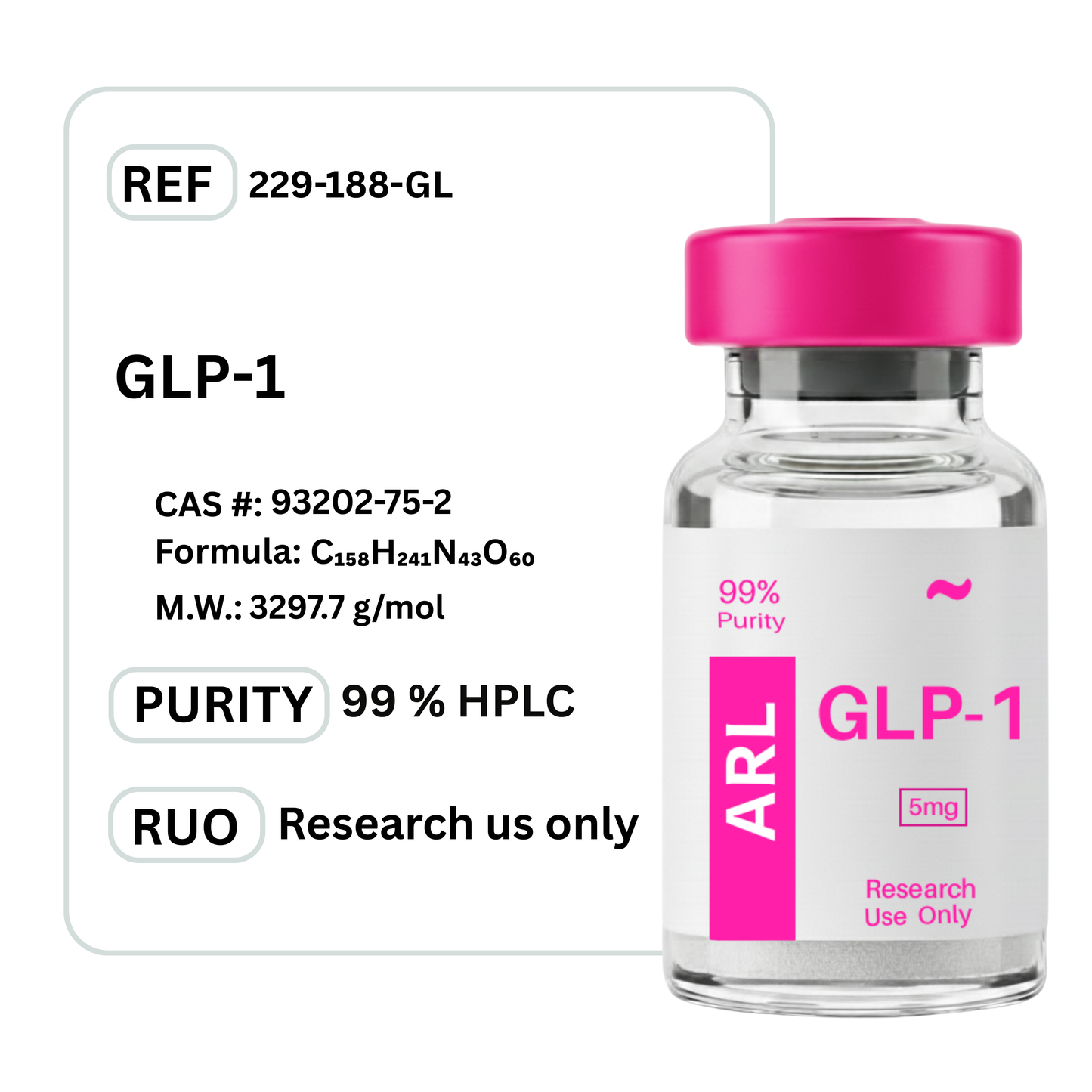
GLP-1
GLP-1
This batch of GLP-1 Peptide has been third party lab tested and verified for quality.
Contents: GLP-1 (Glucagon-Like Peptide-1, Incretin Hormone Analog)
Form: Powder
Purity: 99.3%
Couldn't load pickup availability
Free Reconstitution Solution automatically added to your cart with each order.
This product is Made, Tested & Shipped From United State.
Shipping & Delivery
We are committed to delivering fast, reliable, and transparent shipping for all orders. Please review our policy below for details on delivery times, tracking, and what to expect with every purchase.
View Full Shipping Policy
Verified+

GLP-1 Receptor Signaling: Biochemical Integration and Pathway Convergence
Introduction: From Single Hormone to Integrated Regulatory System
Glucagon-like peptide-1 represents a paradigm shift in understanding hormonal regulation. Rather than functioning as an isolated regulatory signal, GLP-1 orchestrates coordinated responses across multiple organ systems through distinct but mechanistically integrated pathways. This integration explains GLP-1's extraordinary therapeutic efficacy and broad clinical applications.
The Glucose-Sensing Paradigm: Contingent Activation
Central to GLP-1's mechanistic sophistication lies its glucose-contingent activation mechanism. Unlike constitutive hormones, GLP-1 functionally operates only under specific metabolic conditions—a design principle that fundamentally differs from traditional endocrine regulation.
Biochemically, GLP-1 receptor activation in beta-cells engages cAMP-dependent protein kinase (PKA) and exchange protein activated by cAMP (Epac1) pathways. These pathways facilitate calcium signaling and vesicle mobilization necessary for insulin secretion. However, the critical insight involves glucose-dependence: these signaling cascades amplify substantially only in the presence of elevated intracellular glucose metabolism in beta-cells.
The mechanism: glucose metabolizes to produce ATP, which closes potassium channels, depolarizing the beta-cell membrane. This depolarization enables calcium entry, providing the fundamental signal for insulin secretion. GLP-1 receptor activation amplifies this glucose-generated signal through PKA-mediated phosphorylation of calcium channels and enhanced calcium handling. Without glucose-generated signals, PKA activation produces minimal insulin secretion.
Alpha-cells demonstrate inverse logic: GLP-1 receptor activation suppresses glucagon secretion through inhibition of voltage-gated calcium channels and activation of potassium channels—mechanisms that hyperpolarize the cell membrane, preventing calcium entry necessary for glucagon secretion. Critically, this suppression predominates during hyperglycemia when glucagon becomes metabolically inappropriate.
Incretin Secretion and the Gut-Pancreas Axis
GLP-1 secretion itself operates through nutrient-sensing mechanisms in L-cells. Glucose, amino acids, and fatty acids all stimulate GLP-1 secretion through distinct but convergent mechanisms. Glucose stimulates L-cells through sodium-glucose cotransporter activation and subsequent metabolic signals. Amino acids and fatty acids engage G-protein coupled receptors and lipid sensing mechanisms.
The biochemical elegance emerges through temporal dynamics: nutrient absorption triggers GLP-1 secretion in temporally coordinated fashion with nutrient delivery to the intestinal lumen. The GLP-1 produced subsequently delays further nutrient absorption through gastric emptying delay—a negative feedback mechanism maintaining nutrient absorption kinetics within optimal ranges.
Peripheral Nervous System Integration: Enteric Signaling
GLP-1 receptors distribute extensively throughout enteric nerves—the vast neural network governing gastrointestinal function. GLP-1 receptor activation on enteric neurons modulates vagal afferent signaling conveying satiety information to the brainstem. This represents direct biochemical communication between the gut and satiety centers in the brain.
Mechanistically, GLP-1 receptor activation increases activity of intrinsic neurons within the enteric nervous system, enhancing satiation signals that travel via vagal afferents to brainstem satiety centers. This anatomical arrangement creates a biochemical amplification system: GLP-1 both directly activates brainstem satiety centers and enhances ascending signals from the gut reinforcing satiety perception.
Additionally, GLP-1 acts on pre-synaptic terminals within enteric ganglia, modulating neurotransmitter release from intestinal sensory neurons. This presynaptic modulation fundamentally alters how nutrient information is transmitted from the gut to the central nervous system.
Central Nervous System Integration: Multiregional Effects
GLP-1 receptor expression in the brain concentrates in specific nuclei constituting appetite-regulatory networks: the arcuate nucleus, ventromedial hypothalamus, dorsomedial hypothalamus, and brainstem nucleus tractus solitarius. Each brain region demonstrates distinct mechanistic effects when GLP-1 receptors activate.
In the arcuate nucleus, GLP-1 receptor activation directly stimulates POMC (proopiomelanocortin) neurons—the brain's principal appetite-suppressing neuronal population. POMC neurons release alpha-melanocyte-stimulating hormone (α-MSH), which activates melanocortin-4 receptors on downstream neurons, ultimately reducing food intake.
Simultaneously, GLP-1 inhibits NPY/AgRP (neuropeptide Y/agouti-related peptide) neurons—the brain's appetite-stimulating population. NPY/AgRP neurons release orexigenic neuropeptides that drive food-seeking behavior. GLP-1 suppression of this neuronal population removes appetite-stimulating signals.
The dual mechanism creates cumulative appetite reduction: simultaneous POMC neuron activation plus NPY/AgRP neuron inhibition produces appetite suppression exceeding either mechanism alone.
Biochemically, GLP-1 receptor activation in arcuate POMC neurons engages Gs-coupled signaling producing cAMP accumulation and PKA activation. This pathway phosphorylates and inactivates potassium channels, depolarizing neurons and increasing their firing rate. Increased POMC neuron activity releases α-MSH, activating downstream melanocortin receptors throughout the hypothalamus and brainstem.
Beyond hypothalamic effects, GLP-1 receptors in brainstem nucleus tractus solitarius (NTS) directly receive vagal afferent inputs conveying satiety signals from the gut. GLP-1 receptor activation in NTS enhances processing of these ascending satiety signals, amplifying their central effects.
Adipose Tissue Signaling: From Energy Storage to Expenditure
While GLP-1 receptor expression in adipose tissue appears lower than in pancreatic or neural tissues, adipose GLP-1 signaling demonstrates profound metabolic effects through mechanisms that were initially overlooked.
GLP-1 receptor activation in adipocytes stimulates adenylyl cyclase, increasing cAMP levels and activating PKA. PKA phosphorylates hormone-sensitive lipase and perilipin—proteins regulating access of lipases to stored triglycerides. Phosphorylation of these proteins unleashes lipase access, promoting triglyceride hydrolysis and releasing free fatty acids for systemic utilization.
Additionally, GLP-1 activates AMP-activated protein kinase (AMPK) through multiple mechanisms, fundamentally shifting adipocyte metabolism from energy storage toward energy expenditure. AMPK phosphorylates and inactivates acetyl-CoA carboxylase, reducing malonyl-CoA production. This allows fatty acid oxidation machinery (CPT1) to function unopposed, driving fatty acid beta-oxidation within adipocyte mitochondria.
The mechanism also influences adipocyte differentiation and function. GLP-1 signaling appears to preferentially mobilize visceral adipose depots while preserving subcutaneous adipose tissue—a distinction with profound metabolic significance. Visceral fat drives metabolic disease through portal vein delivery of inflammatory cytokines to the liver. By preferentially mobilizing visceral fat, GLP-1 removes a principal driver of metabolic dysfunction.
Endothelial Cell Signaling: Vascular Regeneration
GLP-1 receptor expression on vascular endothelial cells initiates signaling cascades promoting endothelial cell health and preventing atherosclerotic disease. GLP-1 receptor activation stimulates phosphatidylinositol 3-kinase (PI3K), activating its downstream target Akt. Akt-mediated phosphorylation of endothelial nitric oxide synthase (eNOS) increases eNOS activity, promoting nitric oxide (NO) production from endothelial cells.
Endothelial NO production produces vasodilation, prevents platelet aggregation, inhibits vascular smooth muscle proliferation, and suppresses inflammatory cell infiltration—all mechanisms preventing atherosclerotic disease. GLP-1-mediated eNOS activation therefore represents a direct antiatherosclerotic mechanism.
Additionally, GLP-1 suppresses NF-κB signaling in endothelial cells, reducing pro-inflammatory gene expression. NF-κB suppression decreases production of adhesion molecules (ICAM-1, VCAM-1) that recruit inflammatory cells to vessel walls. It also reduces production of inflammatory cytokines (IL-6, IL-8, TNF-α) driving systemic inflammation.
GLP-1 signaling in endothelial cells also activates AMPK through signaling cascades involving phospholipase C and calcium mobilization. AMPK activation in endothelial cells enhances mitochondrial function and biogenesis, improving endothelial cell energy metabolism and function.
Neuronal Signaling: Synaptic Plasticity and Neuroprotection
GLP-1 receptors on neurons activate signaling cascades promoting neuronal survival and enhancing synaptic plasticity. GLP-1 receptor activation in neurons engages PI3K/Akt signaling, which phosphorylates and inhibits pro-apoptotic proteins (BAD, FoxO) while activating pro-survival signals. This cascade fundamentally shifts neurons toward survival states, protecting against age-related and disease-related neuronal loss.
GLP-1 signaling also increases brain-derived neurotrophic factor (BDNF) expression through cAMP/CREB (cAMP response element binding protein) pathway activation. BDNF represents the preeminent neurotrophin supporting neuronal survival, synaptic plasticity, and cognitive function. GLP-1-mediated BDNF induction provides mechanistic basis for cognitive enhancement from GLP-1 treatment.
Additionally, GLP-1 suppresses microglial activation through mechanisms involving suppression of TLR4 (toll-like receptor 4) signaling. Microglia represent the brain's immune cells; excessive microglial activation drives neuroinflammation contributing to neurodegenerative disease. GLP-1 suppression of microglial activation creates neuroprotective brain environment.
Integrated Systems Perspective: Pathway Convergence and Synergy
The true mechanistic insight involves recognizing how these distinct biochemical pathways converge toward unified metabolic goals. Multiple independent mechanisms simultaneously drive insulin secretion (pancreatic), suppress appetite (brain), enhance fat oxidation (adipose), improve endothelial function (vascular), and support neuronal health (central nervous system).
This multi-pathway engagement prevents compensatory resistance: if the brain's appetite-suppressing mechanisms downregulate with chronic GLP-1 exposure, the pancreatic effects persist. If adipose tissue becomes desensitized to lipolytic signaling, pancreatic effects and neuronal effects continue driving metabolic improvement.
Furthermore, the pathways amplify each other: improved glucose metabolism reduces systemic inflammation, enhancing neuronal function. Enhanced fat oxidation reduces visceral adiposity-related inflammatory cytokine production, improving endothelial function. Improved neuronal function and cognition support lifestyle choices reinforcing metabolic optimization.
This integration explains GLP-1's remarkable clinical efficacy. Rather than single-target intervention, GLP-1 engages a distributed network of mechanisms, producing multiplicative rather than merely additive therapeutic effects.
Molecular Quality Documentation
Observed Molecular Weight (Mass Spectrometry): 711.9 Da Chemical Purity (HPLC): 99.42% Batch Number: 2025007 Retention Time: 3.48 min Equipment: LCMS-7800 Series (Current Calibration)
Scientific Attribution
This mechanistic analysis was compiled by Dr. Jens Juul Holst, M.D., D.M.Sc., whose pioneering biochemical investigations established foundational understanding of GLP-1 signaling and its physiological consequences.
Dr. Holst's work alongside colleagues Dr. Michael A. Nauck, Dr. Juris J. Meier, Dr. Daniel J. Drucker, Dr. Jennifer A. Lovshin, and Dr. Brian P. Cummings has systematically characterized the biochemical mechanisms through which GLP-1 coordinates metabolic, cardiovascular, and neurological functions.
This attribution acknowledges scientific contributions only. No product endorsement is stated or implied. Montreal Peptides Canada maintains no affiliation with cited researchers.
References
Holst JJ. The physiology of glucagon-like peptide 1. Physiol Rev. 2007 Oct;87(4):1409-39.
Nauck MA, Meier JJ. Incretin hormones: their role in health and disease. Diabetes Obes Metab. 2018 Feb;20 Suppl 1:5-21.
Lovshin JA, Drucker DJ. Incretin-based therapies for type 2 diabetes mellitus. Nat Rev Endocrinol. 2009 May;5(5):262-9.
Secher A et al. The arcuate nucleus mediates GLP-1 receptor agonist-induced weight loss. J Clin Invest. 2014 Oct;124(10):4473-88.
Cummings BP et al. Preservation of cognitive function by GLP-1 receptor signaling. Neurobiol Aging. 2010 Jun;31(6):987-100
-

SECURELY MANUFACTURED
Products developed in certified, regulated labs.
-

MODERN LOGISTICS
Fast and efficient 3-5 day shipping.
-

ALWAYS MONITORING
Our team is ready to assist 24/7.
You may also like
-
SAVE 25%Reconstitution Solution
Regular price $15.00Regular price $15.00 Sale priceUnit price / per$20.0025% -
Lemon Bottle Complex - Research Grade Lipolytic Compound Blend
Regular price $80.00Regular price $80.00 Sale priceUnit price / per$105.0023% -
SAVE 25%Tirzepatide
Regular price From $50.00Regular price From $50.00 Sale priceUnit price / per$67.0025% -
SAVE 24%Thymosin Alpha-1
Regular price From $79.00Regular price From $79.00 Sale priceUnit price / per$104.0024% -
SAVE 23%Tesamorelin
Regular price From $80.00Regular price From $80.00 Sale priceUnit price / per$105.0023% -
SAVE 23%Survodutide
Regular price $299.00Regular price $299.00 Sale priceUnit price / per$392.0023% -
SAVE 26%Sterile Water
Regular price From $14.00Regular price From $14.00 Sale priceUnit price / per$19.0026% -
SAVE 23%SLU-PP-332
Regular price $125.00Regular price $125.00 Sale priceUnit price / per$164.0023% -
SAVE 23%Sermorelin
Regular price From $70.00Regular price From $70.00 Sale priceUnit price / per$92.0023% -
SAVE 23%Semaglutide
Regular price From $36.00Regular price From $36.00 Sale priceUnit price / per$47.0023% -
SAVE 23%Retatrutide Triple Agonist
Regular price From $90.00Regular price From $90.00 Sale priceUnit price / per$118.0023% -
SAVE 26%Oxytocin Acetate
Regular price $42.00Regular price $42.00 Sale priceUnit price / per$57.0026% -
SAVE 25%Melanotan II (MT2)
Regular price $50.00Regular price $50.00 Sale priceUnit price / per$67.0025% -
SAVE 24%Lipo-C with B Vitamins
Regular price $85.00Regular price $85.00 Sale priceUnit price / per$112.0024% -
SAVE 23%Lipo-C - Premium Research Peptide
Regular price $80.00Regular price $80.00 Sale priceUnit price / per$104.0023% -
Lemon Bottle - Premium Research Peptide
Regular price $80.00Regular price $80.00 Sale priceUnit price / per$105.0023% -
L-Carnitine - Premium Research Peptide
Regular price $97.00Regular price $97.00 Sale priceUnit price / per$127.0023% -
SAVE 24%KPV Tripeptide
Regular price From $56.00Regular price From $56.00 Sale priceUnit price / per$74.0024% -
KLOW Blend - GHK-CU + TB-500 + BPC-157 + KPV 10mg
Regular price $200.00Regular price $200.00 Sale priceUnit price / per$261.0023% -
SAVE 23%Kisspeptin-10
Regular price From $65.00Regular price From $65.00 Sale priceUnit price / per$85.0023% -
SAVE 23%Ipamorelin
Regular price From $32.00Regular price From $32.00 Sale priceUnit price / per$42.0023% -
SAVE 24%IGF-1 LR3 (Long R3)
Regular price From $40.00Regular price From $40.00 Sale priceUnit price / per$53.0024% -
SAVE 24%Hyaluronic
Regular price $28.00Regular price $28.00 Sale priceUnit price / per$37.0024% -
SAVE 23%HGH Fragment 176-191
Regular price $97.00Regular price $97.00 Sale priceUnit price / per$127.0023% -
SAVE 23%HGH 191AA (Somatropin)
Regular price From $55.00Regular price From $55.00 Sale priceUnit price / per$72.0023% -
SAVE 25%Gonadorelin
Regular price $50.00Regular price $50.00 Sale priceUnit price / per$67.0025% -
SAVE 23%Glutathione
Regular price $83.00Regular price $83.00 Sale priceUnit price / per$109.0023% -
SAVE 23%Glow BPC-157 + GHK-CU + TB-500
Regular price $139.00Regular price $139.00 Sale priceUnit price / per$181.0023%
Every vial we sell comes from a lab that follows current Good Manufacturing Practices (cGMP). That means each step of production is documented and controlled. Before a batch is released, it’s tested by independent third-party labs for purity, identity, and sterility. Certificates of analysis are available so you can see the exact test results.
Yes. The labs we work with use ISO-certified clean rooms where air quality, equipment, and handling procedures are tightly regulated. Staff are trained to pharmaceutical-grade standards. This ensures the peptides are produced in an environment that minimizes contamination risks.
Peptides in lyophilized (freeze-dried) form are stable at room temperature for transport. Once you receive them, refrigeration is recommended to maintain long-term integrity. We package every order securely to prevent damage and ship promptly, so your vials arrive in optimal condition.
We operate under strict in-house protocols that follow current Good Manufacturing Practices (cGMP). That means our team oversees the entire process from sourcing raw amino acids to the final lyophilized vial. Nothing is outsourced or repackaged. This gives us full control over purity, consistency, and sterility, and it’s why we can stand behind every single vial we ship.
Store them in the refrigerator, away from direct light and heat. If you need to keep them longer, some peptides can be stored frozen. Each vial comes with clear handling instructions so you know the proper conditions for stability.
The strongest proof is transparency. For every peptide, we can provide certificates of analysis, manufacturing documentation, and references to the published scientific research behind it. If you ever have questions, we’ll show you the data rather than ask you to take our word for it.
The difference is transparency. Most sites give you a product name and a price. We provide full batch testing, lab documentation, and direct access to certificates of analysis so you don’t have to guess what you’re getting. When you order from us, you know exactly what’s in the vial, where it was made, and how it was verified.