


L-Carnitine - Premium Research Peptide
L-Carnitine - Premium Research Peptide
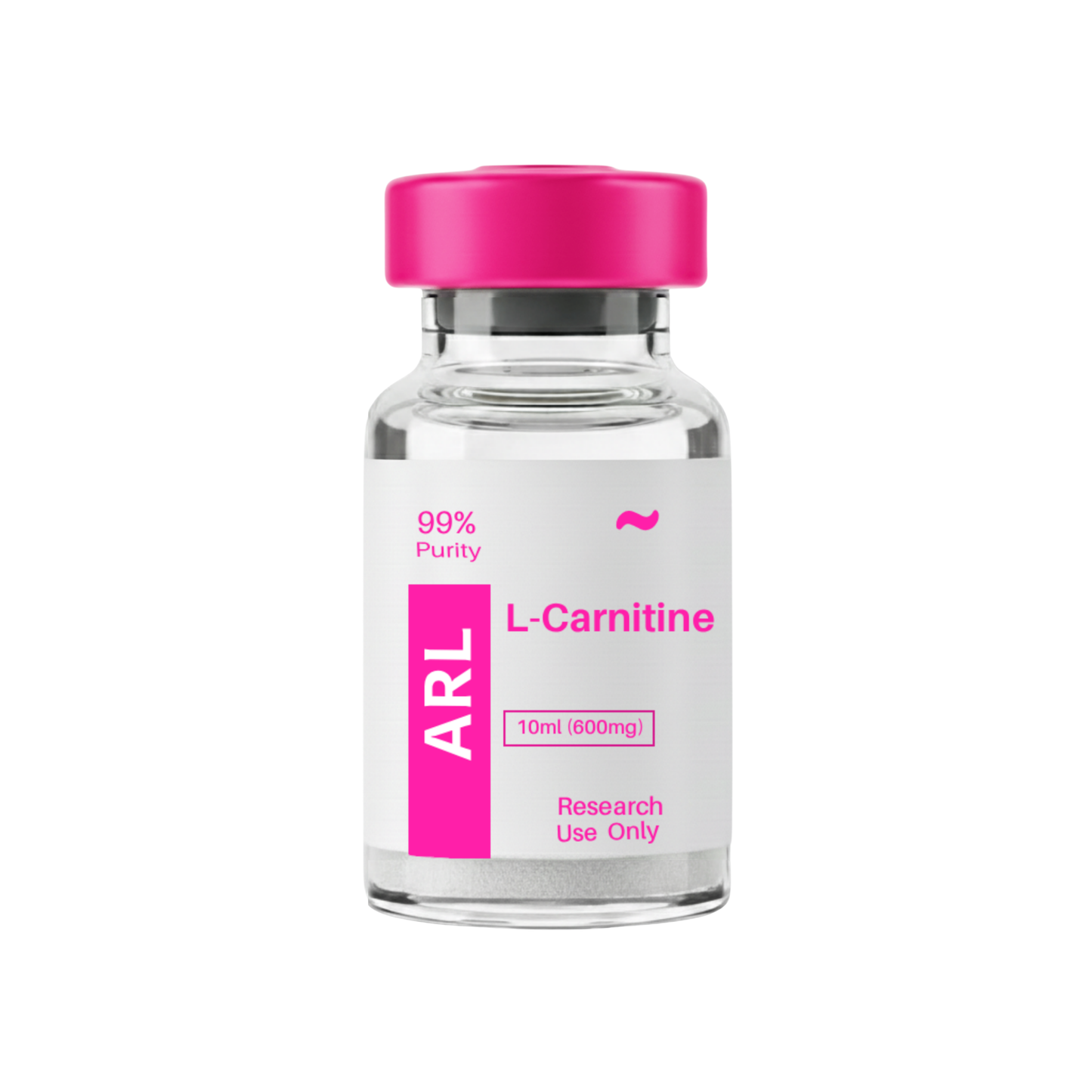
This batch of L-Carnitine Injectable Solution Peptide has been third party lab tested and verified for quality.
Contents: L-Carnitine
Form: Liquid Solution
Purity: 99.83%
Couldn't load pickup availability
 Free Reconstitution Solution automatically added to your cart with each order.
This product is Made, Tested & Shipped From United States.
Shipping & Delivery
We are committed to delivering fast, reliable, and transparent shipping for all orders. Please review our policy below for details on delivery times, tracking, and what to expect with every purchase.
View Full Shipping Policy

Verified+






You may also like
-
 SAVE 25%
Reconstitution Solution
Regular price $15.00Regular price $15.00 Sale priceUnit price per$20.0025% -
Lemon Bottle Complex - Research Grade Lipolytic Compound Blend
Regular price $80.00Regular price $80.00 Sale priceUnit price per$105.0023% -
 SAVE 25%
Tirzepatide
Regular price From $50.00Regular price From $50.00 Sale priceUnit price per$67.0025% -
 SAVE 24%
Thymosin Alpha-1
Regular price From $79.00Regular price From $79.00 Sale priceUnit price per$104.0024% -
 SAVE 23%
Tesamorelin
Regular price From $80.00Regular price From $80.00 Sale priceUnit price per$105.0023% -
 SAVE 23%
Survodutide
Regular price $299.00Regular price $299.00 Sale priceUnit price per$392.0023% -
 SAVE 26%
Sterile Water
Regular price From $14.00Regular price From $14.00 Sale priceUnit price per$19.0026% -
 SAVE 23%
SLU-PP-332
Regular price $125.00Regular price $125.00 Sale priceUnit price per$164.0023% -
 SAVE 23%
Sermorelin
Regular price From $70.00Regular price From $70.00 Sale priceUnit price per$92.0023% -
 SAVE 23%
Semaglutide
Regular price From $36.00Regular price From $36.00 Sale priceUnit price per$47.0023% -
 SAVE 23%
Retatrutide Triple Agonist
Regular price From $90.00Regular price From $90.00 Sale priceUnit price per$118.0023% -
 SAVE 26%
Oxytocin Acetate
Regular price $42.00Regular price $42.00 Sale priceUnit price per$57.0026% -
 SAVE 25%
Melanotan II (MT2)
Regular price $50.00Regular price $50.00 Sale priceUnit price per$67.0025% -
 SAVE 24%
Lipo-C with B Vitamins
Regular price $85.00Regular price $85.00 Sale priceUnit price per$112.0024% -
 SAVE 23%
Lipo-C - Premium Research Peptide
Regular price $80.00Regular price $80.00 Sale priceUnit price per$104.0023% -
Lemon Bottle - Premium Research Peptide
Regular price $80.00Regular price $80.00 Sale priceUnit price per$105.0023% -
L-Carnitine - Premium Research Peptide
Regular price $97.00Regular price $97.00 Sale priceUnit price per$127.0023% -
 SAVE 24%
KPV Tripeptide
Regular price From $56.00Regular price From $56.00 Sale priceUnit price per$74.0024% -
KLOW Blend - GHK-CU + TB-500 + BPC-157 + KPV 10mg
Regular price $200.00Regular price $200.00 Sale priceUnit price per$261.0023% -
 SAVE 23%
Kisspeptin-10
Regular price From $65.00Regular price From $65.00 Sale priceUnit price per$85.0023% -
 SAVE 23%
Ipamorelin
Regular price From $32.00Regular price From $32.00 Sale priceUnit price per$42.0023% -
 SAVE 24%
IGF-1 LR3 (Long R3)
Regular price From $40.00Regular price From $40.00 Sale priceUnit price per$53.0024% -
 SAVE 24%
Hyaluronic
Regular price $28.00Regular price $28.00 Sale priceUnit price per$37.0024% -
 SAVE 23%
HGH Fragment 176-191
Regular price $97.00Regular price $97.00 Sale priceUnit price per$127.0023% -
 SAVE 23%
HGH 191AA (Somatropin)
Regular price From $55.00Regular price From $55.00 Sale priceUnit price per$72.0023% -
 SAVE 25%
Gonadorelin
Regular price $50.00Regular price $50.00 Sale priceUnit price per$67.0025% -
 SAVE 23%
Glutathione
Regular price $83.00Regular price $83.00 Sale priceUnit price per$109.0023% -
 SAVE 23%
Glow BPC-157 + GHK-CU + TB-500
Regular price $139.00Regular price $139.00 Sale priceUnit price per$181.0023%


Every vial we sell comes from a lab that follows current Good Manufacturing Practices (cGMP). That means each step of production is documented and controlled. Before a batch is released, it’s tested by independent third-party labs for purity, identity, and sterility. Certificates of analysis are available so you can see the exact test results.
Yes. The labs we work with use ISO-certified clean rooms where air quality, equipment, and handling procedures are tightly regulated. Staff are trained to pharmaceutical-grade standards. This ensures the peptides are produced in an environment that minimizes contamination risks.
Peptides in lyophilized (freeze-dried) form are stable at room temperature for transport. Once you receive them, refrigeration is recommended to maintain long-term integrity. We package every order securely to prevent damage and ship promptly, so your vials arrive in optimal condition.
We operate under strict in-house protocols that follow current Good Manufacturing Practices (cGMP). That means our team oversees the entire process from sourcing raw amino acids to the final lyophilized vial. Nothing is outsourced or repackaged. This gives us full control over purity, consistency, and sterility, and it’s why we can stand behind every single vial we ship.
Store them in the refrigerator, away from direct light and heat. If you need to keep them longer, some peptides can be stored frozen. Each vial comes with clear handling instructions so you know the proper conditions for stability.
The strongest proof is transparency. For every peptide, we can provide certificates of analysis, manufacturing documentation, and references to the published scientific research behind it. If you ever have questions, we’ll show you the data rather than ask you to take our word for it.
The difference is transparency. Most sites give you a product name and a price. We provide full batch testing, lab documentation, and direct access to certificates of analysis so you don’t have to guess what you’re getting. When you order from us, you know exactly what’s in the vial, where it was made, and how it was verified.